You promised yourself you would be the calm parent. Then it is the fourth time you have asked about the shoes, your toddler is melting down on the kitchen floor, and you hear your own voice getting louder. If you have read the books, know exactly what you want to say, and still end up yelling, you are not alone.
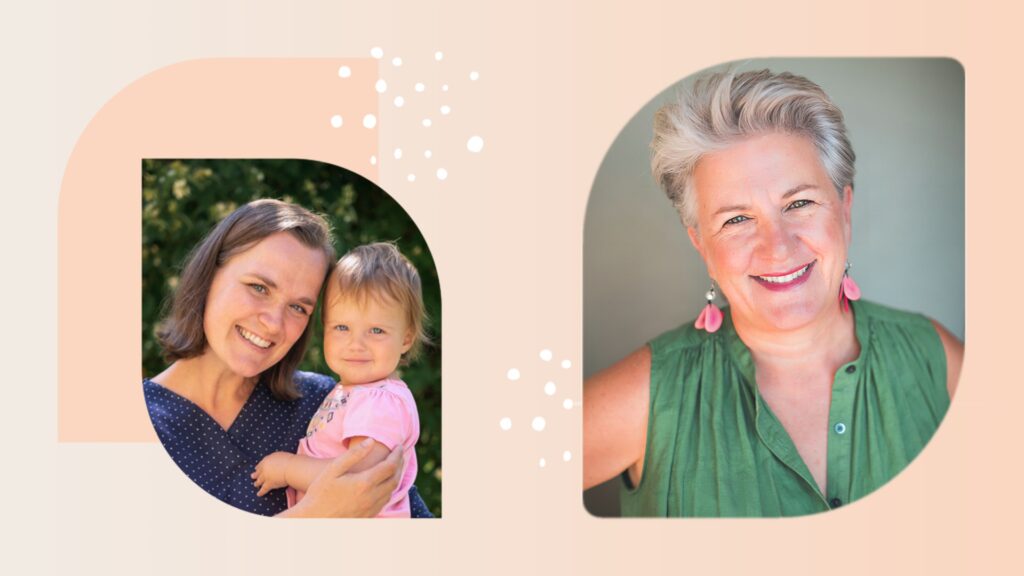
This talk is part of our ongoing series inside the Childhood Potential Club, where members gain access to expert LiveTalks, the full recordings with live Q&A, and a growing library of over 200 videos on Montessori and conscious parenting. Our guest, Hunter Clarke-Fields, is the author of Raising Good Humans and the host of the Mindful Mama Podcast. In this talk she explains why yelling is so hard to stop by willpower alone, what happens in our body in the moment we snap, and the practical tools that helped her change.
From parenting yeller to Raising Good Humans
Hunter grew up with a father who had a terrifying temper, and before she became a mother she really wanted to be the calm one. Then her daughter turned two. “Her tantrums would cause my tantrums,” she says. She remembers sitting outside her daughter’s door, ashamed, hearing her cry because she had scared her. She was listening to all the good parenting advice and only felt worse, because she could not put it into practice.
What started the change was offering herself compassion instead of blame, so she could get curious about what was going on. She came to see her temper as a generational pattern she had never chosen, and that made it something she could work with.
Why deciding to stop is not enough
Hunter uses an old image: our conscious mind is like the rider of an elephant. We can have ideas about where we want to go, but if the elephant wants to go somewhere, it goes. The Zen teacher Thich Nhat Hanh, one of her teachers, called these deep patterns habit energies. On top of the triggers from our own childhood come the everyday stressors of family life.
Understanding all this helps, but Hunter compares it to tennis. You can read a great book about tennis, and you will still only get good by practicing on the court.
What happens in the second before we snap
When our child triggers our stress response, the amygdala takes over and cuts off access to the prefrontal cortex, the part of the brain responsible for problem solving, verbal ability and impulse control. “So when we’re under the stress response, we’re in this place of impaired parenting,” Hunter says. Everything we have learned is still there. We just cannot reach it.
That is why, in her words, the best time to respond to your child’s big outburst is way before it happens. Sleep, food, exercise, time with friends and time by yourself are the infrastructure for good parenting. Mindfulness helps too: studies show that an eight-week mindfulness practice can shrink the amygdala and grow the prefrontal cortex. And you can practice the pause without sitting in meditation for twenty minutes every day, for example by taking one deep breath before you answer your child in a calm moment.
In the moment: recognize, remove yourself, use your resources
Hunter calls her in-the-moment tools the three Rs. Recognize: simply naming what you feel, “I’m feeling really frustrated,” lowers your stress, and saying it out loud teaches your child some emotional intelligence along the way. Remove yourself: if everyone is safe, it is better to step away than to lose it at your child. She once put her toddler safely in her crib and walked out onto her balcony, closing three doors behind her. Use your resources: longer exhales (in for four, out for six), shaking out your whole body like a zebra after a chase, a forward fold, or a mantra. Her favorite is “This is not an emergency.”
Repair after you have yelled
Repair starts with ourselves. Calling yourself a terrible mother does not make you a better one, so Hunter tells herself, “I have permission to be human.” Then you can apologize, ask for a do-over, offer a hug and talk about what happened. Repair teaches children how to apologize and make things right with their friends, and it can leave you closer than if there had been no conflict at all.
Why kids tune us out, and how to hold a boundary
Sometimes we talk too much, or make threats we never follow through on. Kids also tune us out when we are not real with them. When her daughters were thirteen, saying “When you talk to me that way, I feel sad” reached them better than the usual parental defenses.
With little ones, humor goes a long way: pretend you cannot find the way out of the playground and walk into the playground equipment. With older kids, acknowledge the feeling (“I know, it’s really hard to leave”) and then hold the boundary, firm and kind at the same time. It is okay for your child to be upset, and it is not your problem to fix.
Your needs matter too
Hunter’s mother was a nurse, the family did not have a lot of money, and she still went horseback riding because she loved it. Only in her thirties did Hunter realize her mother had been modeling that her needs mattered. When her own daughter was a baby and did not love the gym childcare, Hunter still left her there for an hour so she could go for a run, and came back a better parent. When we always put ourselves last, we teach our children that life becomes terrible after you have kids.
Start with the pause
If you take one thing from this talk, Hunter suggests practicing the pause. When your child asks you a simple question, take one deep breath in and out before you answer. Do the same when you get into the car. Small pauses sprinkled through the day slow you down and build the muscle memory you will need for the hard moments.
Meet Hunter Clarke-Fields
Hunter Clarke-Fields is the bestselling author of Raising Good Humans, with more than 900,000 copies sold and translations in 19 languages, and Raising Good Humans Every Day. She is the host of the Mindful Mama Podcast, a mindfulness meditation teacher, global speaker, and co-founder of the Mindful Parenting Institute, where she trains parents and professionals in evidence-based mindful parenting. She has over 20 years of experience in meditation and yoga, created the Mindful Parenting Course and the Mindful Parenting Teacher Certification Program, and is the mother of two daughters. You can find her free resources at mindfulmamamentor.com.