Is the baby sleeping? Is the baby eating? Am I going to spoil her if I hold her all day? In the first weeks with a new baby the questions never stop, and most of them are about the baby. If you have ever wondered when someone would ask how you are doing, you are not alone.
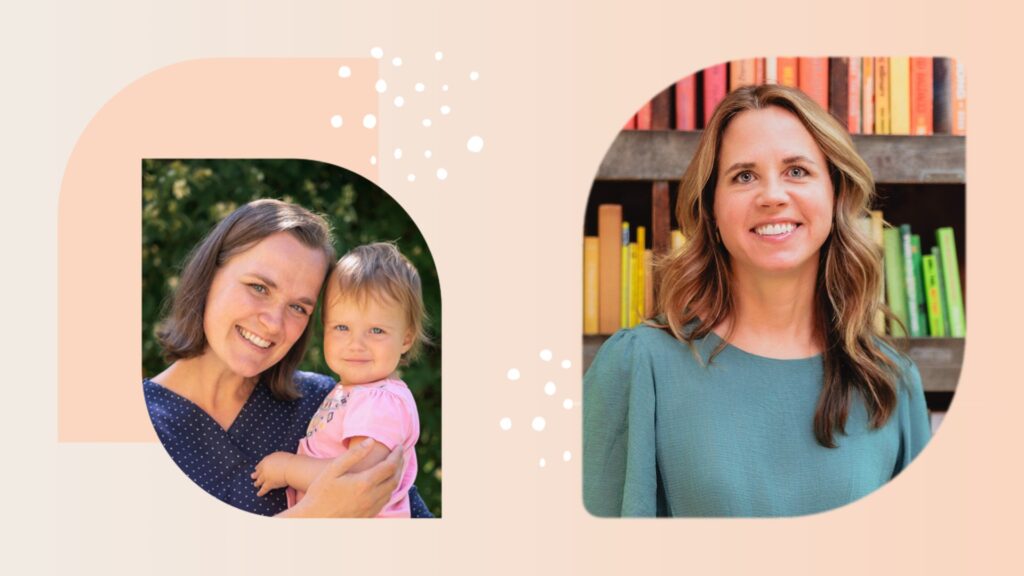
This talk is part of our ongoing series inside the Childhood Potential Club, where members gain access to expert LiveTalks, the full recordings with live Q&A, and a growing library of over 200 videos on Montessori and conscious parenting. Our guest, Jeanne-Marie Paynel, is a Montessori guide, childbirth educator and doula who has spent more than twenty years with families before the birth and in the early weeks after it. In this talk she explains what a baby actually needs in the first year, why the weeks after the birth deserve a plan of their own, and how to trust yourself when everyone has advice.
What a baby actually needs
When parents ask Jeanne-Marie what a baby needs, her first answer is simple: “They just need you the way you are.” Your skin, your smell and your heartbeat are what a newborn knows. Babies do not need gadgets and extra stimulation. They are going through a big transition of their own, and those first weeks are about getting to know each other and simply looking at your baby. She feels parents today are bombarded with information about milestones and things to do, so much that they forget the instinctual part of them that just wants to hold their baby. And she means every caregiver who is close to the baby, not only mothers.
Planning for the weeks after the birth
Most families plan the birth in detail and the weeks after it much less. Jeanne-Marie would rather see couples cut the wedding budget in half and save it for postpartum. “Postpartum is really about mothering the mother,” she says. In an ideal situation you do nothing but cuddle your baby, feed your baby, feed yourself and sleep, with a team of people around you doing the rest. A mother has grown a human, given birth and is going through a huge hormonal shift, and she needs warm, easy food, rest and someone checking on her mental health, not only on the baby.
In her prenatal visits she asks every family: who is going to take care of you? That means meals, pets or older children, groceries, and what to say to visitors. People who want to come over can drop off food instead, and some families even tell others a due date a few weeks later than the real one, so the first weeks stay quiet.
Four places your baby uses at home
Very little needs to be ready before the birth. Jeanne-Marie thinks in four areas: somewhere to sleep, somewhere to feed, somewhere for physical care and somewhere to move. In Montessori these are points of reference. Your baby’s first point of reference is you, and when the same places are used again and again, your baby learns what happens there.
The feeding area should above all be comfortable for the adult, with everything at arm’s reach. For physical care, she asks parents to turn the changing table so they face their baby straight on instead of working sideways, and to talk through everything they do. The movement area is the simplest of all: a mat or blanket on the floor, very few things, and no battery operated toys. Everything is already new and stimulating for a newborn.
Preparing a toddler for a new baby
Young children do not perceive time the way we do, so there is no need to talk about the baby too early. When the questions come, use real words and good books, and help your older child step into the new role without pressure. Jeanne-Marie recommends getting a topponcino, a small Montessori pillow, so a toddler can safely hold the baby. Once the baby is here, involve the older child: “What do you think baby is saying right now? Do you think he needs a diaper? Do you mind getting me a diaper?” And if the answer is no, that is fine too.
She also shares a candle activity from Jane Nelsen’s Positive Discipline: one candle for each family member’s love, each lit from the flame before. When the baby’s candle is lit, the child can see that no flame went out. Some regression is normal, so no shaming, and if you can, have someone help with the baby so you get one on one time with your toddler.
Reading your baby’s cues
Crying is communication, but it is often a baby’s last resort. Before it, there are facial expressions, a fist in the mouth, small sounds that you start to recognize when you are watching your baby and not your app or your watch. Not every cry means hunger either, so it is worth pausing to work out what your baby is telling you instead of reaching for something to soothe them straight away. Observation and trusting yourself, she says, are the strongest tools a parent has.
Can you spoil a newborn?
“You can never ever, ever, ever spoil a newborn,” Jeanne-Marie says. She was told the opposite many times as a young mother. As she puts it, we are the only mammals who think it is okay to separate ourselves from our newborns. Babies need your contact and your voice, and being close is important for their brain development too. At the same time, she reminds parents that their own needs matter: when it gets to be too much, let someone else hold the baby so you can take a shower or a nap.
Floor time and the baby who cries on the mat
In the live Q&A, a question came up about babies who cry as soon as they are put down on the floor. Maybe they want you down there with them, Jeanne-Marie suggests, and tummy time can also happen on your chest. Observe the baby, yourself and the room: is there a draft, is it too bright? She prefers an open floor to exersaucers and other contraptions, because a baby needs to discover what their body can do on their own timeline, and it takes a good twelve months to go from squirming on the floor to standing on their own two legs.
When the advice gets too loud
Her last advice is to put the device down and maybe delete the apps that keep you second guessing yourself. Parents tell her that ChatGPT told them something, and she asks back: what does your heart tell you, and what is your baby telling you? Spend time observing your baby, go outside, ask for help when it is too much, and if you need another opinion, ask a family whose parenting you admire. “You are a wonderful, amazing parent,” she tells parents, and sometimes that means shutting out the noise.
Meet Jeanne-Marie Paynel
Jeanne-Marie Paynel, M.Ed. is a bilingual childbirth educator, parenting mentor, Montessori guide and doula. For more than two decades she has walked with families from before conception through the early postpartum months. She holds a master’s in Montessori education and AMI diplomas for birth to six, and after six years guiding a primary classroom she trained further for the birth to three years. She founded Voila Montessori, today Your Parenting Mentor, hosts The Art of Parenting podcast, and is the mother of two grown children. Her free Montessori Nursery Guide is at voilamontessori.com.